
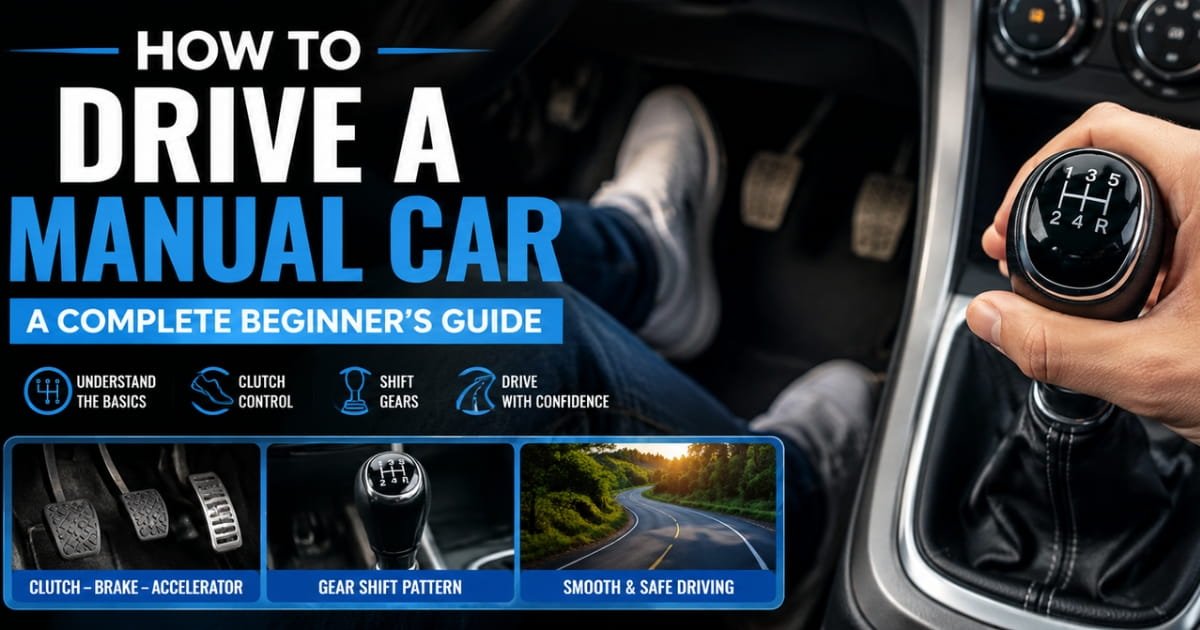
Learning how to drive a manual car may seem difficult at first, but it becomes easier once you understand the clutch, brake, accelerator, and gear stick. With the right technique and regular practice, you can learn to shift gears smoothly and drive with confidence.
In this beginner-friendly guide, you’ll learn how to drive a manual car step by step, from starting and finding the clutch biting point to changing gears, stopping, reversing, driving uphill, and handling traffic. You’ll also learn common mistakes to avoid while practicing.
What You Need to Know Before Driving a Manual Car
Learn the Pedals and Controls
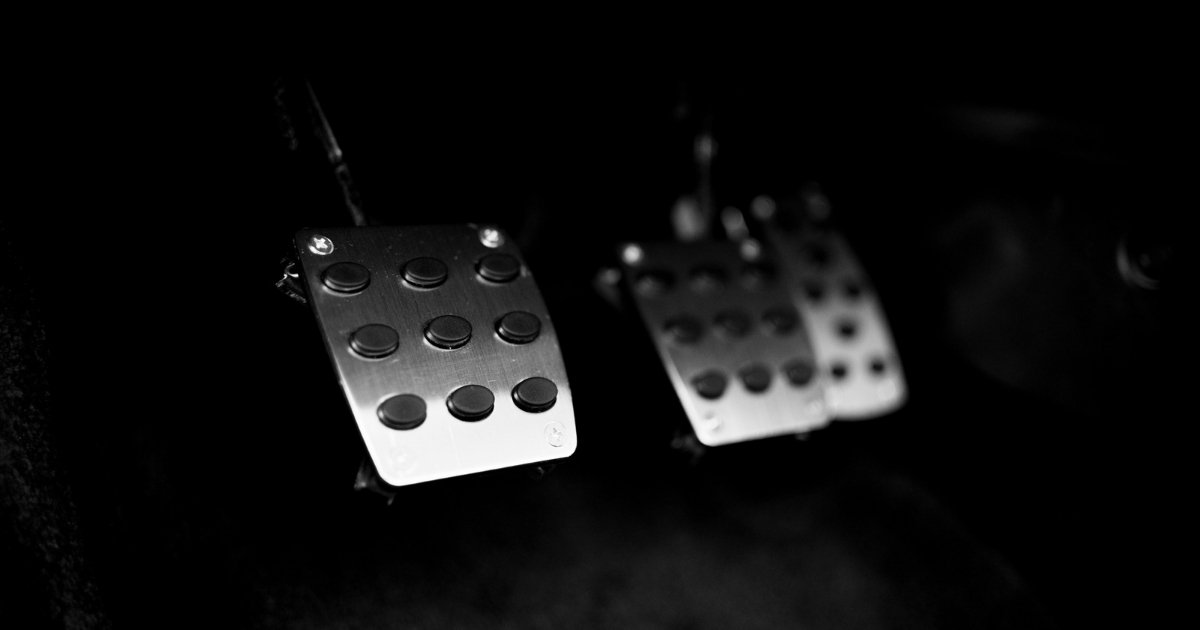
Recognizing the pedals and controls is essential for learning how to drive a manual car. In a manual transmission car, you’ll see three pedals under the driver’s feet. From left to right they are: Clutch, Brake, and Accelerator. Your left foot operates the clutch pedal, which disconnects the engine from the wheels when fully pressed.
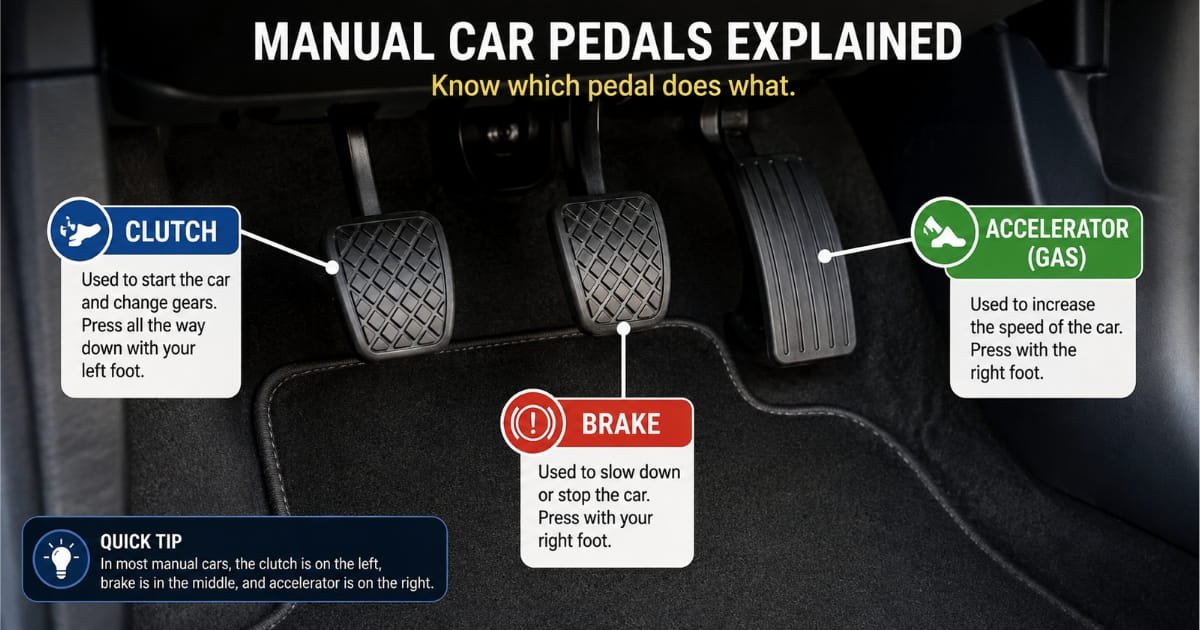
The center pedal is the brake, used to slow or stop. The right pedal is the gas (accelerator) pedal, which controls engine power. It’s helpful to remember “A–B–C”: Accelerator, Brake, Clutch. You must fully press the clutch each time you change gears, or the gearbox can grind.
Understand the Gear Stick and Neutral
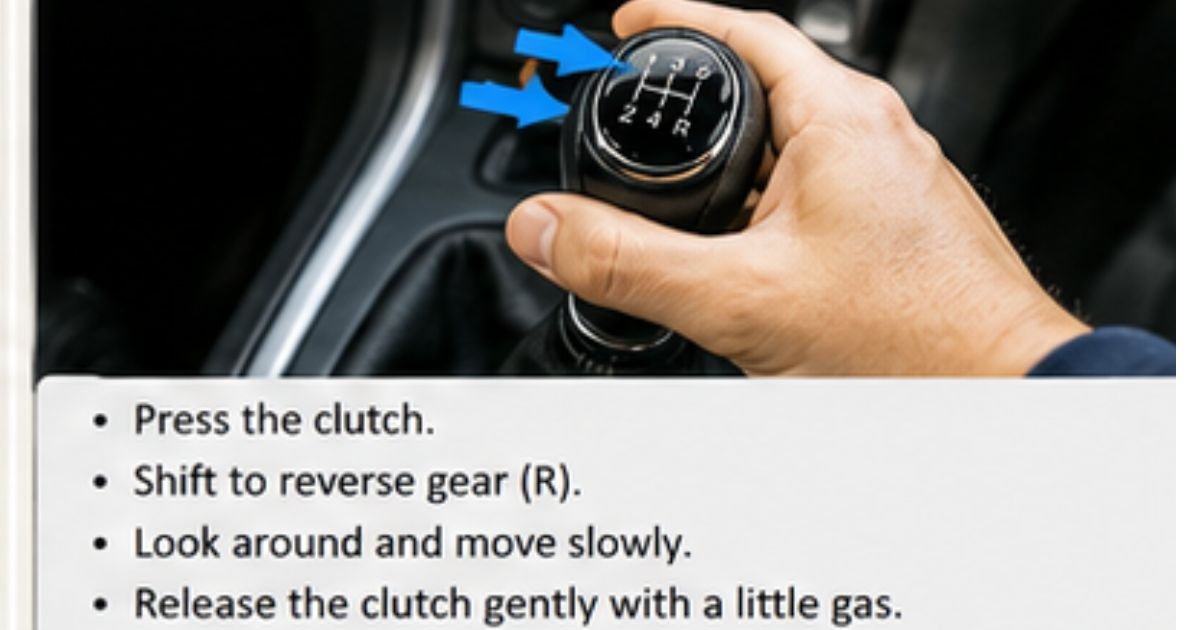
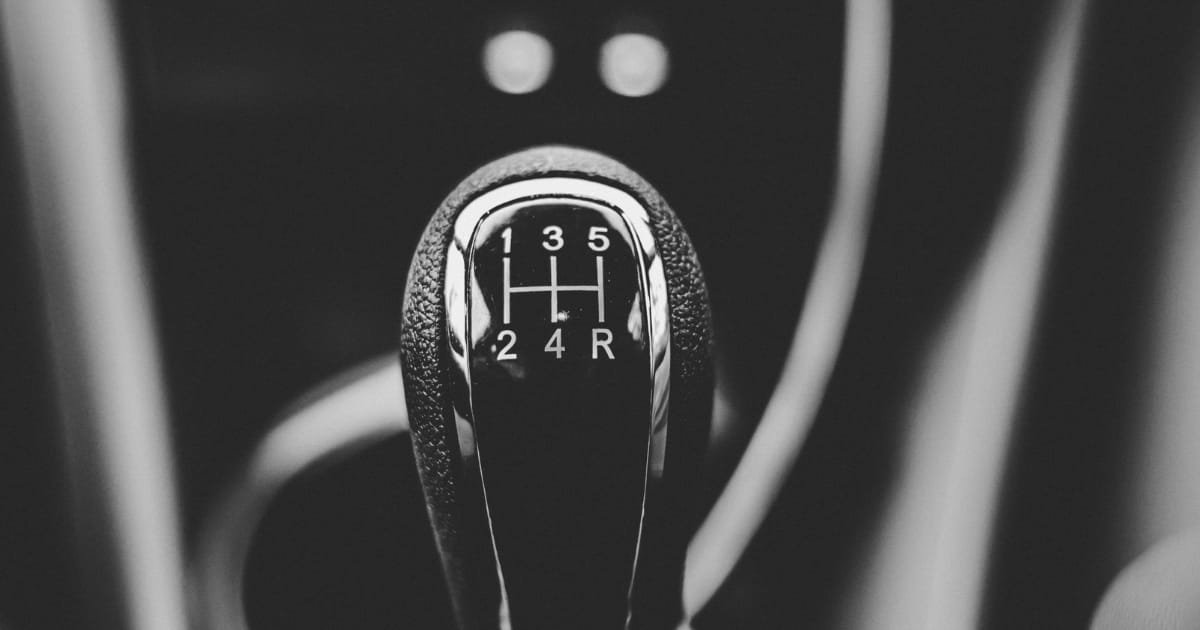
Also learn the layout of the gear lever. Most manuals have 5 or 6 forward gears (numbered 1–5 or 1–6) plus R for reverse. A diagram on the knob shows the shift pattern. Neutral is the middle “free” position (wiggle left and right). Use the clutch whenever you shift or the car is at a stop; failing to do so can damage the gearbox. To park, you’ll use the handbrake (parking brake) – usually a lever beside the seat. It locks the wheels when you exit, and it is crucial for holding the car on hills.
How to Drive a Manual Car: Step-by-Step
Step 1: Get Comfortable and Prepare the Car
If you are learning how to drive a manual car for the first time start in a safe and an open area where you can practice freely. Adjust your seat so you can fully press the clutch with your left foot. Fasten your seatbelt and check mirrors. Keep the gear stick in neutral and the handbrake on. With the clutch and brake pedals held down, start the engine.
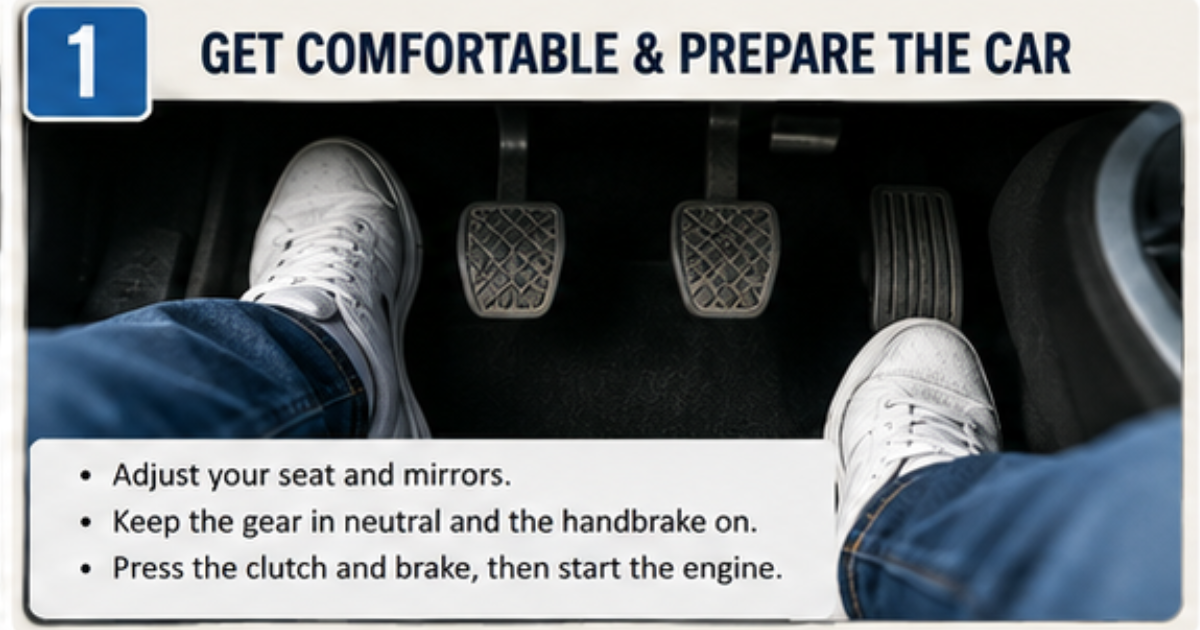
This is important: Before starting the car, fully press the clutch with your left foot and brake with your right foot. Do check the gear stick is in neutral, then turn the ignition on.
Check your tires before practicing: Before you start learning how to drive a manual car, make sure your tires are properly inflated. A portable tire inflator can make it convenient to check and top up tire pressure at home or before a driving session.
Step 2: Select First Gear
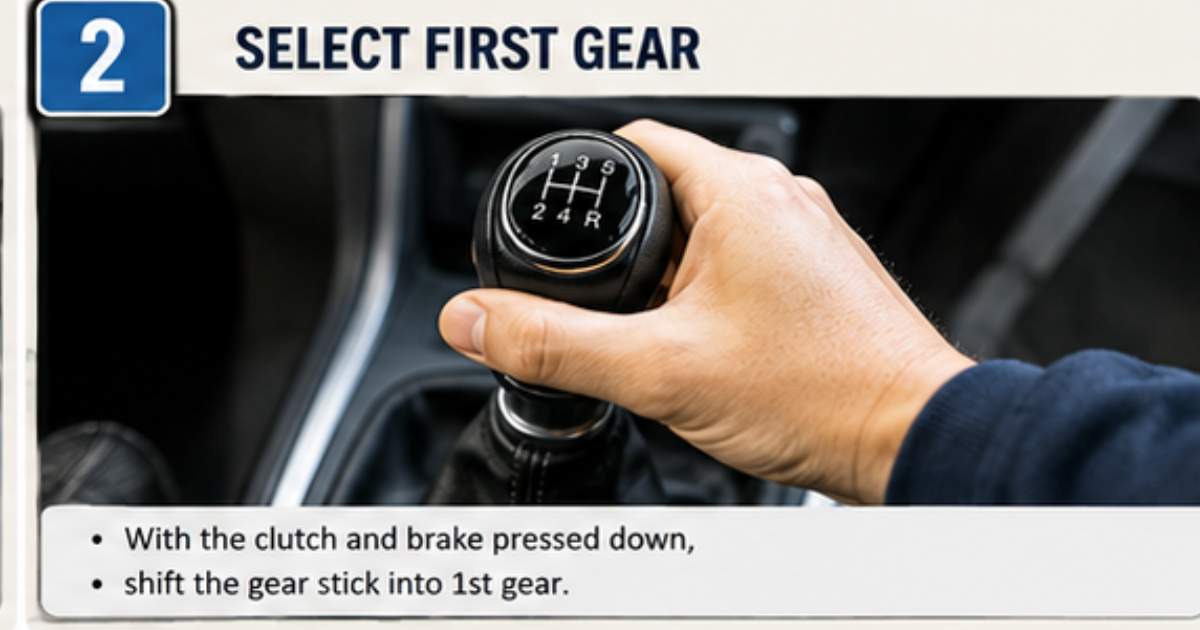
With the engine running, release the handbrake. Still holding brake and clutch, shift the lever into first gear (press the stick into the slot marked “1st”).
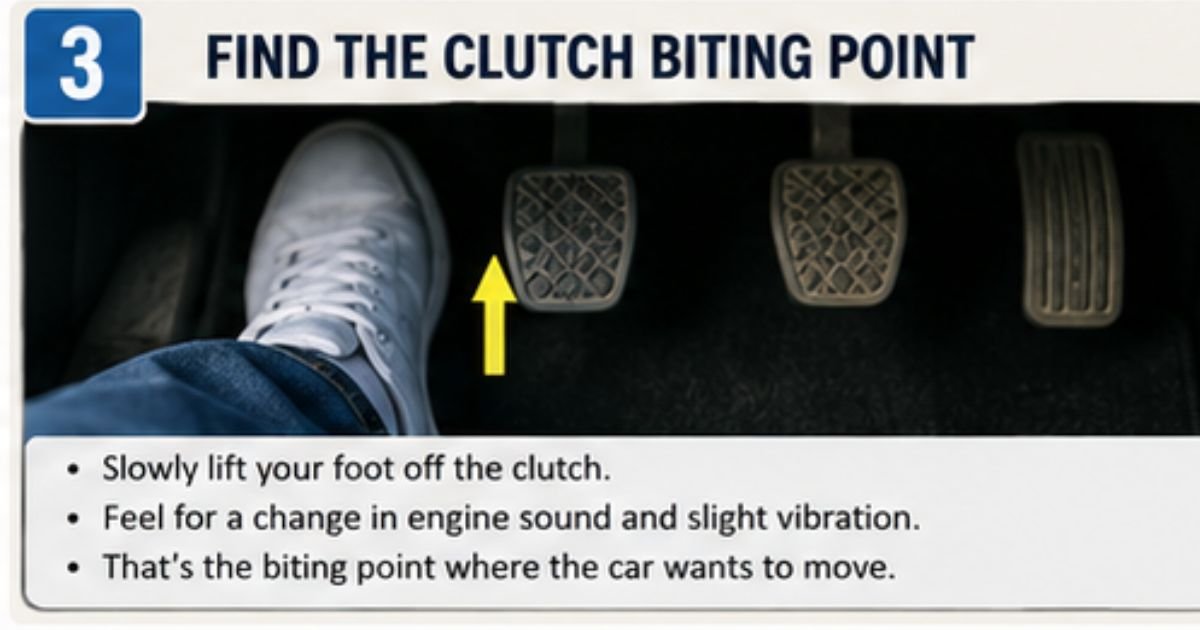
Step 3: Find the Clutch Biting Point
Gently lift your left foot off the clutch. You’ll feel a point where the engine’s sound changes slightly and the car wants to move. This is the clutch biting point. When you start lifting your left foot slowly and raise the clutch, start pressing the accelerator gently with the help of your right foot.
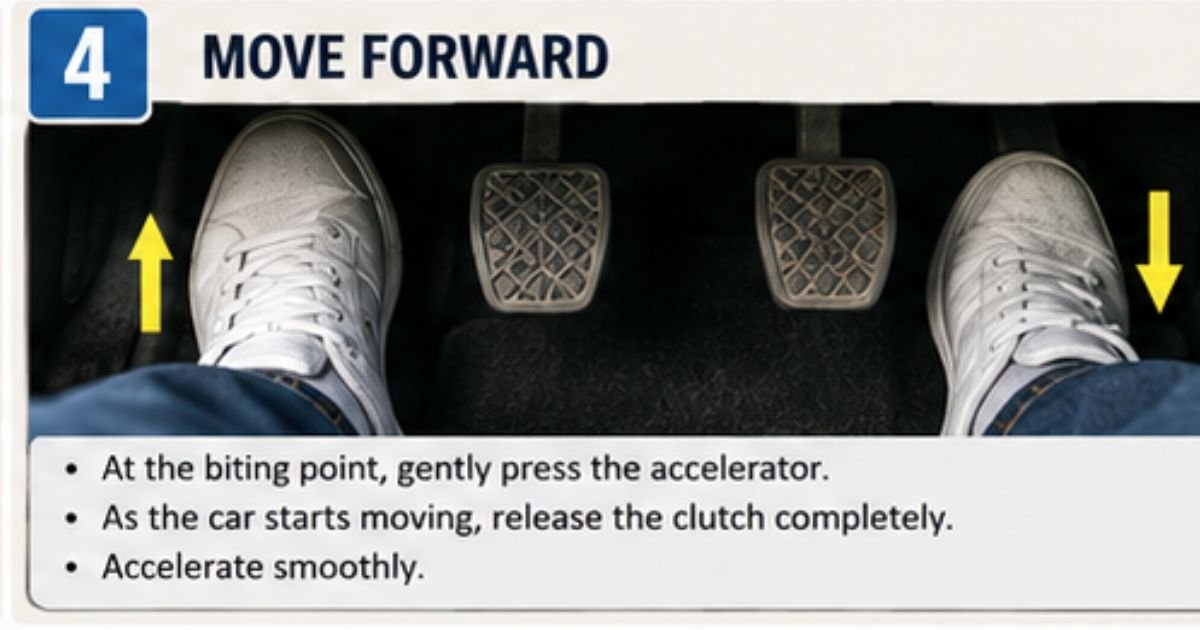
Step 4: Move Forward
As the clutch engages, slowly press the gas to keep the engine running smoothly. The car will start to roll gently. Once the car starts to move, keep on lifting your left foot off the clutch until its completely off the pedal.
Step 5: Keep the Start Smooth
Remember to be smooth: lift the clutch steadily and add only a little gas. This gentle coordination prevents stalling or jerking.
How to Find the Clutch Biting Point
The biting point (or engagement point) is where the clutch plates start to connect and the car begins to move. To practice:
- With the car in first gear and the clutch fully down, slowly lift your left foot.
- Feel for a slight vibration or hear the engine sound change as the car tries to move forward. That signal is the biting point.
- At the biting point, pause briefly and apply a bit of throttle (gas) to prevent stalling.
New drivers should practice this repeatedly in a flat, empty parking lot or quiet road. Try the sequence with the engine off at first to build muscle memory: press clutch, select first gear, slowly release clutch until bite, then re-press clutch. Over time, locating the biting point becomes instinctive, letting you move off smoothly.
How to Change Gears in a Manual Car
Upshifting to Higher Gears
Once moving, you’ll shift up to accelerate. Upshifting means selecting a higher gear. Typically, shift up around 2,500–3,000 RPM (or when the engine starts to sound strained). When the engine reaches a suitable RPM ( based on the manual car model ), press the clutch fully and shift to the next gear. After upshifting, slowly remove your foot off the clutch and press accelerator.
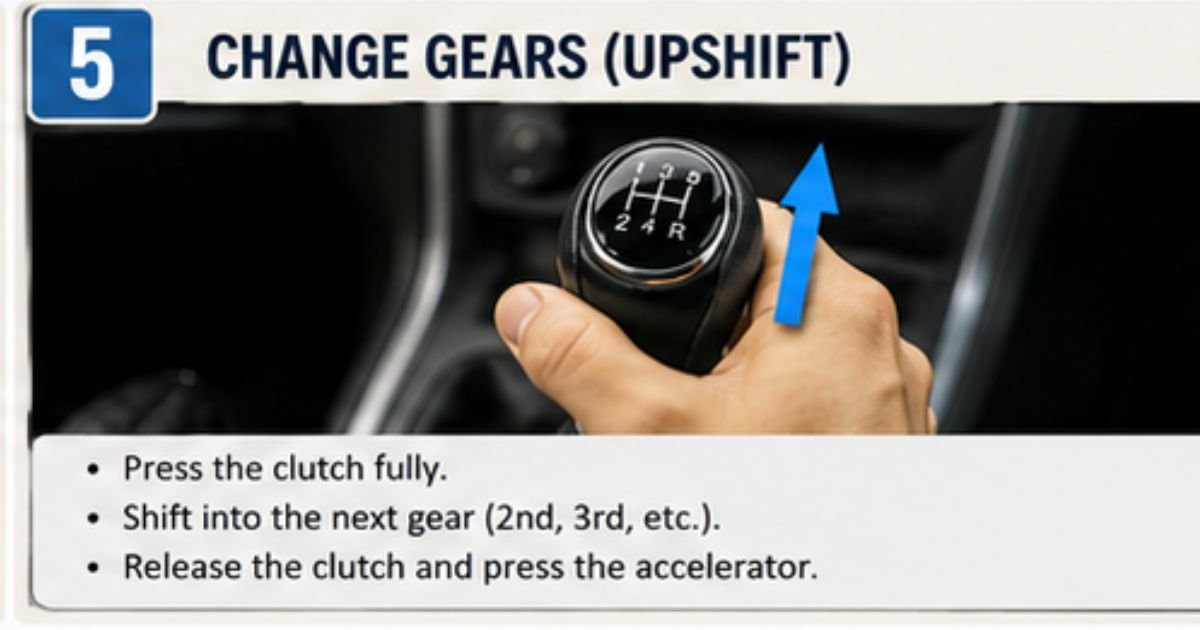
So to upshift, press the clutch, move from 1st to 2nd, release clutch smoothly while adding gas, and accelerate in 2nd. Repeat as you speed up (to 3rd, 4th, etc.).
Downshifting to a Lower Gear
When slowing down, downshift to a lower gear to match the speed. For example, slow to around 25–30 mph before shifting from 3rd to 2nd. Shift down by pressing clutch, shifting, then releasing clutch gently. Engine braking (downshifting) helps slow the car.
Use RPM to Help You Shift
A tachometer (RPM gauge) can guide you: usually around 3,000 RPM is a safe shift point. Use the tachometer as a guide, but do not rely on one RPM number for every vehicle. Shift before the engine reaches the redline and learn to recognize the point where your particular car sounds and feels ready for the next gear.
| Gear | Typical Use |
| 1st | Starting, very slow |
| 2nd | Low-speed driving |
| 3rd | City streets |
| 4th | Higher city / low ways |
| 5th | Highway cruising |
| 6th | Highway ( if equipped ) |
*Some manuals have a 6th gear for fuel economy.
Match the Gear to Your Speed
Always match gear to speed: being too low a gear makes the engine race and jerk; too high a gear makes it lug and feel weak. If the engine is labored or stalling, downshift. With experience you’ll learn shifting by feel and sound.
How to Stop a Manual Car Without Stalling
Stopping Step by Step
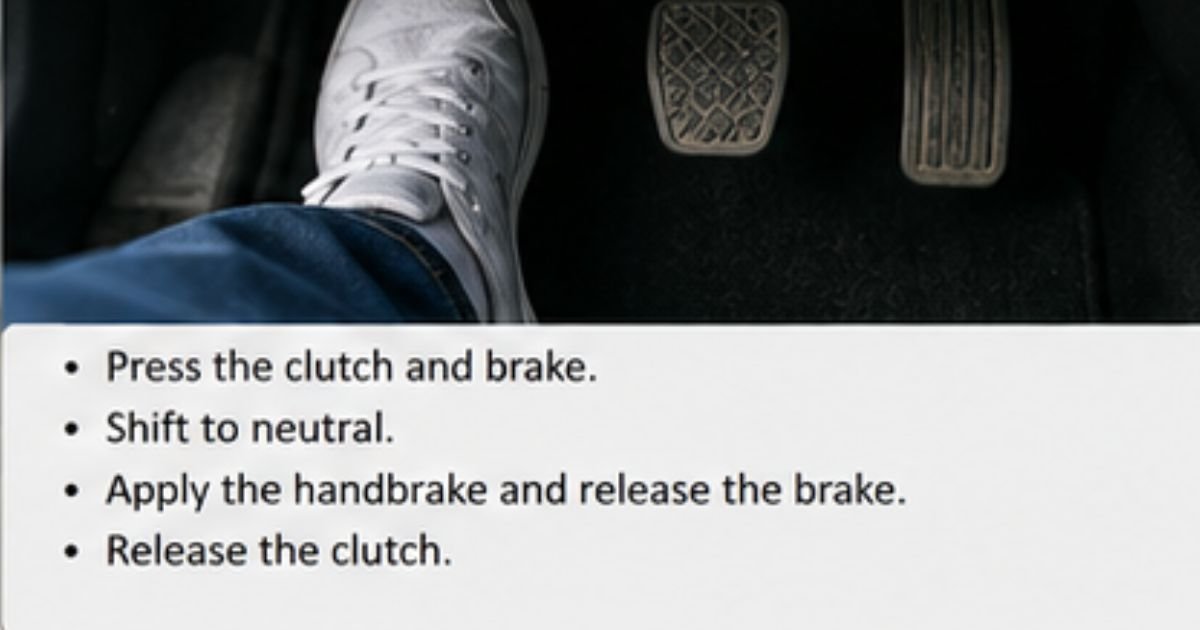
To slow or stop, begin by easing off the accelerator and pressing the brake. If you’re slowing significantly (under ~5 mph), also press the clutch to avoid cutting the engine abruptly. In practice: apply brakes gradually, and as the car nearly stops, push the clutch in with your left foot and shift to neutral. At a full stop, keep the brake held, then you can release the clutch if in neutral.
What to Do If the Engine Stalls
If the engine stalls, press the clutch and brake, move the gear stick into neutral, and restart the engine. Once the car is running again, select first gear and begin the starting process again with smoother clutch control. In other words, don’t panic if it stalls – just repeat the starting procedure calmly (clutch in, neutral, restart, then first gear).
What to Do at a Red Light or Stop
If the light is red or you’re stopped in traffic, you have options: either hold the clutch down in first (for a very quick restart) or shift to neutral and rest your foot. Generally, shifting to neutral and releasing the clutch at long stops can reduce wear on the clutch.
How to Reverse a Manual Car
Reverse Step by Step
First, come to a complete stop and keep your right foot on the brake. Hold the clutch down with your left foot. Shift into Reverse gear (most cars have a diagram on the stick). Always check behind you, use mirrors, and look over your shoulder to ensure no pedestrians or obstacles.
Improve your view around the car: Small blind-spot mirrors can provide an additional viewing angle while checking your surroundings.
Control the Car While Reversing
When ready, slowly release the clutch until you feel the car’s bite point in reverse (it will creep back slightly). Then gently press the accelerator for smooth movement. Keep steering movements gradual as you back up. Slowly raise the clutch until the car begins to creep backward. Hold the pedal around that engagement point briefly, then add a little accelerator and continue releasing the clutch gradually.
Maintain slow speed and awareness of surroundings. To stop reversing, press the clutch in and brake to a halt. Reverse only as far as needed for parking or turning, since visibility is limited.
How to Drive a Manual Car Uphill
Driving Uphill
Climbing a slope requires planning. Shift to a lower gear before the hill (often 2nd or even 1st if very steep) so the engine stays in its power band. If the engine speed becomes too low while climbing, the engine may begin to struggle, vibrate, or lose the power needed to keep the car moving. So downshift early to keep revs up and avoid lugging.
Starting on a Hill
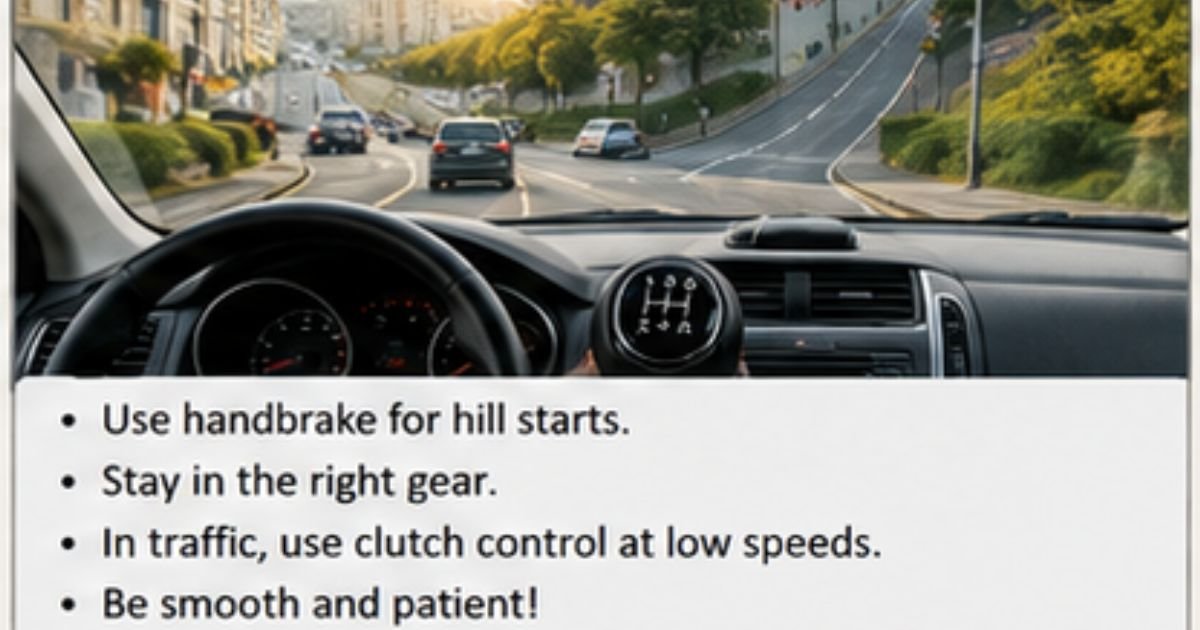
If you stop on a hill, use the handbrake method: while the car is stopped, engage the handbrake, keep clutch pressed, and press the accelerator a bit. Then release the handbrake as you slowly lift the clutch. This prevents rolling back.
On a hill, use the handbrake to help keep the car stationary while you find the clutch engagement point. Add gentle accelerator input, then release the handbrake as you smoothly raise the clutch. Practice this timing – too much clutch release without gas will stall, too much gas will jerk.
Driving Downhill
When descending a hill, downshift as needed to use engine braking and keep safe control. Avoid coasting in neutral; keeping a gear engaged helps slow the car and saves brake wear.
How to Drive a Manual Car in Traffic
Driving in Stop-and-Go Traffic
In stop-and-go traffic, you’ll spend most time in 1st or 2nd gear. Keep a safe gap and adjust speed with smooth throttle. If creeping at under ~10 mph, you can stay in first. Second is good up to ~20 mph.
What to Do at Traffic Lights
Avoid riding the clutch in traffic. If you stop at a light and expect to move quickly, you can leave the car in first with clutch down. For longer waits, shift to neutral and release the clutch. This gives your leg a rest and avoids unnecessary wear.
Stay Smooth and Anticipate Traffic
Always watch traffic ahead and anticipate slowdowns. Make small throttle adjustments rather than constant braking. Try not to rev the engine loudly while waiting in gear – that only causes noise and waste. In heavy traffic, some drivers even shift into neutral when stopped. Either way, focus on smooth coordination: clutch and brake fully in when stopped, and move off gently when cars ahead start moving again.
Common Manual Driving Mistakes and How to Avoid Them
Avoid Stalling
When learning how to drive a manual car beginners often make similar errors. One is stalling by letting the clutch out too quickly or using too little throttle. Releasing the clutch too quickly can interrupt the smooth transfer of power and cause the engine to stall, so raise the pedal gradually when moving away from a stop. If you do stall (engine dies), simply press clutch/brake, shift to neutral, restart as above.
Useful troubleshooting tool: If your car keeps stalling even after you improve your clutch control, an OBD2 scanner can help you check for stored diagnostic trouble codes. The ANCEL AD410 is a practical option for basic vehicle diagnostics.
Avoid Riding the Clutch
Another frequent mistake while learning how to drive a manual car is riding the clutch. This means keeping your foot partly on the clutch when not shifting, even lightly engaging it. This overheats the clutch plates. This can increase clutch wear and generate unnecessary heat. When waiting on a hill or sitting at a longer stop, use the brake or handbrake and take your foot off the clutch when practical.
Avoid Choosing the Wrong Gear
Other errors: choosing the wrong gear (too low a gear causes high RPM noise, too high a gear makes the engine stall or lug). Always listen to the engine: if it sounds like it’s straining or bogging, shift down. Avoid constantly looking at the gear stick – keep eyes on the road. If you do jerk or stall, stay calm. Stalling happens to everyone learning; simply repeat the starting steps with more clutch and throttle control.
Keep Practicing
With practice, these mistakes become rare and you master how to drive a manual car. Focus on smooth actions and watch how experienced drivers shift.
How to Drive a Manual Car Smoothly
Coordinate the Clutch and Accelerator
Knowing how to drive a manual car also means learning to drive it smoothly. Smoothness comes from gentle, coordinated control. Always release the clutch slowly and add throttle smoothly at the same time. Avoid sudden movements: don’t dump the clutch or stomp the gas. If the engine revs spike, catch it by pressing the clutch back down and reapplying power.
Plan Shifts and Braking
Plan your shifts ahead. Shift gears at moderate RPM (around 2k–3k) to keep acceleration even. When braking, do it progressively. As you come to a stop, press the clutch before the car stops moving to prevent lurching.
Make Downshifts Smoothly
Downshifting should also be smooth: slow the car, clutch in, shift, then clutch out gradually. Avoid forcing shifts or revving hard in the process. Many tips to smooth driving come from experience: the better you get at finding the biting point and matching the gas, the more seamless the ride becomes.
How to Avoid Damaging the Clutch and Transmission
Use the Correct Gear
While learning how to drive a manual car gear selection matters too. Don’t lug the engine by staying in too high a gear, and don’t over-rev it in too low a gear. Quick, unnecessary shifting (like revving in neutral) can also stress components. Treat the clutch smoothly: fully engage or disengage it when possible, and avoid riding or slipping it more than needed. Following these tips will help your clutch easily last 100,000 miles or more.
Protect the Clutch
Manual gearboxes last a long time if driven properly. But certain habits cause premature wear. Never rest your foot on the clutch pedal when driving or stopped; this “clutch foot” habit leaves the clutch partly engaged. If you’re at a standstill, shift to neutral and release the clutch.
Avoid Unnecessary Clutch Slip
Avoid holding the clutch partially on hills or in traffic. As mentioned, use the handbrake if stopped on an incline. Also, keep engine revs as low as practical: giving a lot of throttle while slipping the clutch (for example, on a hill start) generates heat and wear. Modern cars can often creep from idle in first gear without any gas, so minimize throttle use at the bite point.
Frequently Asked Questions About How to Drive a Manual Car
Is it difficult to drive a manual?
Once you develop clutch control and practice changing gears, manual driving usually becomes much easier and more automatic. Start somewhere quiet and safe, learn one skill at a time, and build up to normal traffic as your confidence improves.
How do you start a manual car?
Start in neutral with the parking brake on. Hold the clutch down with your left foot and the brake with your right, then start the engine. With the engine running, shift into first gear and slowly lift the clutch to the biting point while gently pressing the gas.
Keep a jump starter in your car: If the engine does not crank because of a weak or dead battery, a portable jump starter can be useful. The NOCO Boost Plus GB40 is a compact option designed for emergency starting.
Why does a manual car stall?
For beginners, the most common cause is releasing the clutch too quickly, especially when starting from a stop, or not giving enough accelerator input when the clutch reaches its biting point.
Stalling can also happen when the car is travelling too slowly for the selected gear.
What happens if you release the clutch too quickly?
Releasing the clutch too quickly can make the car jerk or cause the engine to stall, especially when moving away from a stop.
How long does it take to learn to drive a manual car?
Most beginners can learn the basic controls and gear changes with regular practice, but becoming confident in traffic can take longer depending on practice time and coordination.
What is the clutch biting point?
he clutch biting point is the moment when the clutch begins connecting engine power to the wheels, often felt as a slight vibration or movement as the car starts to creep.
Do I need a special license to drive a manual car?
For a regular passenger car, you generally do not need a separate manual-transmission license in the U.S.; however, licensing rules can vary by state. Commercial licenses can have an automatic-transmission restriction if the skills test is taken in an automatic vehicle.
What do gear 1, 2, 3, 4, and 5 mean?
The numbers on a manual gear stick represent different gear ratios that help the engine deliver power at different speeds. 1st gear provides strong pulling power for starting, while 2nd and 3rd are commonly used as the car gains speed. Higher gears such as 4th and 5th are generally used for faster, steadier driving.
Conclusion
In summary, learning how to drive a manual car involves understanding and practicing with the clutch, brakes, accelerator, and gear stick. Begin in a safe, empty area and get comfortable with the pedals and gears. Follow the step-by-step process: start in neutral, use first gear, find the biting point, and then master upshifts and stops. Pay attention to clutch control to avoid stalling or wear. With patience and practice, driving a manual car will become second nature, giving you full control over your ride and the confidence to tackle any car, anywhere. Contact Us if you have more queries.

Zoha is a dedicated content writer who enjoys researching useful topics and turning detailed information into clear, practical and easy-to-understand articles. With a focus on helpful and reader-friendly content, Zoha creates well researched guides designed to answer everyday questions and help readers make decisions.